
From Theory to Practice: What We’ve Learned About Nudging in 2025
4 min read
Estimated reading time
Micaela Dunn
Author
2025-09-11
Published
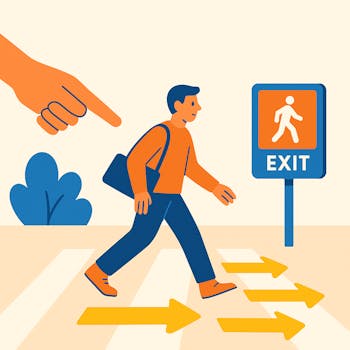
Behavioural science has long sought to understand what makes people tick. When Thaler and Sunstein first popularised _nudge theory_ back in 2008, the idea that subtle tweaks in choice architecture could steer behaviour without restricting freedom was revolutionary.
More than 15 years on, the theory has moved beyond its initial novelty. The real question today is: _how has nudging held up in practice?_ After years of real-world application in marketing, policy, and digital platforms, we now have a wealth of evidence showing not only when nudges work, but also when they don’t, and what risks they bring.
A recent 2024 study on carbon offsetting, for example, demonstrated that reframing a message to leverage social norms could dramatically increase participation in pro-environmental behaviour, even among experts. This illustrates a critical point: it’s not the theory that’s new, but the growing body of insights into how nudges function “in the wild.”
To see why some nudges succeed and others backfire, we need to revisit the psychology that underpins them.
The Psychology Behind Nudging
Not all choices feel equally easy. Identical options may be embraced by some and ignored by others because of how our brains process information. We operate with two systems of thought: System 1 (fast, intuitive) and System 2 (slow, deliberate).
Nudge theory taps into this dual-process model by shaping decisions in ways that align with our cognitive tendencies. Rather than persuading with logic, nudges reconfigure the environment around the choice. Common strategies include:
- Social Norms (System 1): When unsure, we look to others. Highlighting descriptive norms (what most people do) or injunctive norms (what people approve of) plays on our need to belong. An energy company used this effectively by showing customers how their usage compared to neighbours’, adding a smiley face for reinforcement. The mental shortcut is simple: _if others are doing it, I should too.
_
- Loss Aversion & Framing (System 1): Generally speaking, people feel losses about twice as strongly as equivalent gains, though this can be context dependent. A 2024 study found that framing flood insurance around the potential loss of one’s home increased sign-ups by 19% compared to framing it as a gain in protection. The facts don’t change - just the frame.
- Defaults & Simplification (System 2 to System 1): Because we are “cognitive misers,” we often stick with the easiest option. Making the desired choice the default is one of the most powerful nudges. For example, a food delivery app changed “Add cutlery?” to “Help reduce plastic waste by skipping cutlery.” This subtle reframe boosted opt-outs by 37%, turning a System 2 consideration into an easy System 1 choice.
But in a world of shrinking attention spans and information overload, even a well-designed nudge risks going unnoticed.
From Theory to Practice: How Nudges Work in Today’s World
With the average attention span on a single screen now just 47 seconds, complex or overly reflective nudges often fail. The key lies in matching the design of the nudge to the context of the decision.
- For fast, low-involvement choices, effective nudges are simple and visual, like “Top Pick” tags or “Low in stock” labels that require little effort to process.
- For long-term goals, “commitment devices” can be more powerful. These leverage loss aversion by attaching a cost to failure - for example, fitness apps that charge users if they skip a pre-committed workout.
Digital platforms amplify these strategies, enabling nudges that target both our fast and slow thinking. But their effectiveness depends on striking the right balance: knowing when to speak to the hare brain and when to engage the tortoise mind.
The Hidden Risks and Ethical Minefield
Real-world experience has also revealed the risks of nudging. Poorly designed interventions can trigger psychological reactance - the urge to resist control. Nike learned this in 2024 when urgency-framed ads for discounted trainers backfired - because the discount only applied to kids’ sizes, customers felt misled and pushed back.
The danger here isn’t just ineffective marketing. At scale, nudges that are perceived as manipulative, often called dark patterns, can erode consumer trust. Regulators are increasingly concerned about the ethical boundary between helpful guidance and covert manipulation.
There’s also evidence of unintended consequences. A 2025 study found that nudging individuals to adopt climate-friendly behaviours sometimes reduced their support for broader, more impactful policies such as carbon taxes. What seems like a success at the individual level may undermine systemic change.
And consumers themselves are becoming harder to fool. Deloitte’s research on Gen Z shows that this cohort values authenticity and quickly spots insincerity. Nudges that feel manipulative or “try-hard” are more likely to fail than persuade.
Looking Ahead
So, what’s new here? Not the concept of nudges themselves - that’s been around for years. What’s new is our ability to evaluate them through real-world evidence, digital experimentation, and large-scale data. We now know far more about the conditions that make nudges succeed, the risks of misapplication, and the ethical lines that marketers and policymakers must navigate.
For practitioners, nudging is no longer a theoretical tool - it’s a practical, widely used method that demands both creativity and responsibility.
And for consumers? It’s a reminder that the environments shaping our everyday choices - whether in supermarkets, apps, or policy - are designed with behavioural science in mind. Nudges may be subtle, but their influence on our lives has never been stronger.
References
- Carattini, S., & Blasch, J. (2024). _Nudging when the descriptive norm is low: Evidence from a carbon offsetting field experiment._ _Journal of Behavioral and Experimental Economics_, 110, Article 102194.
- Kahneman, D. (2011). _Thinking, Fast and Slow_. Farrar, Straus and Giroux.
- Thaler, R. H., & Sunstein, C. R. (2008). _Nudge: Improving Decisions About Health, Wealth, and Happiness_. Yale University Press.
- Lahoti, K. R., Hanji, S., Kamble, P., & Vemuri, K. (2023). _Impact of Loss-Framing and Risk Attitudes on Insurance Purchase: Insights from a Game-like Interface Study_.
- Maksimenko, V., Xin, Q., Gupta, P., Zhang, B., & Bansal, P. (2025). _Large Language Models Enable Personalized Nudges to Promote Carbon Offsetting Among Air Travellers_.
Continue reading
The choices that drive purchases are made quickly and mostly outside awareness. The smartest research measures those first few seconds.
Darren Bridger · 2026-05-03
Read more
Designing effective packaging is a challenging business. Not only must you win over shoppers within seconds, but you must do so against the ever-evolving range of competitors on the shelves. Real…
Darren Bridger · 2026-05-03
Read more
Every first Monday in May, millions of us tune in to the Met Gala for one reason: to look. As each celebrity arrives at the exclusive fashion fundraiser, our eyes immediately see something that makes…
Kiara-Lee Govender · 2026-04-24
Read more